
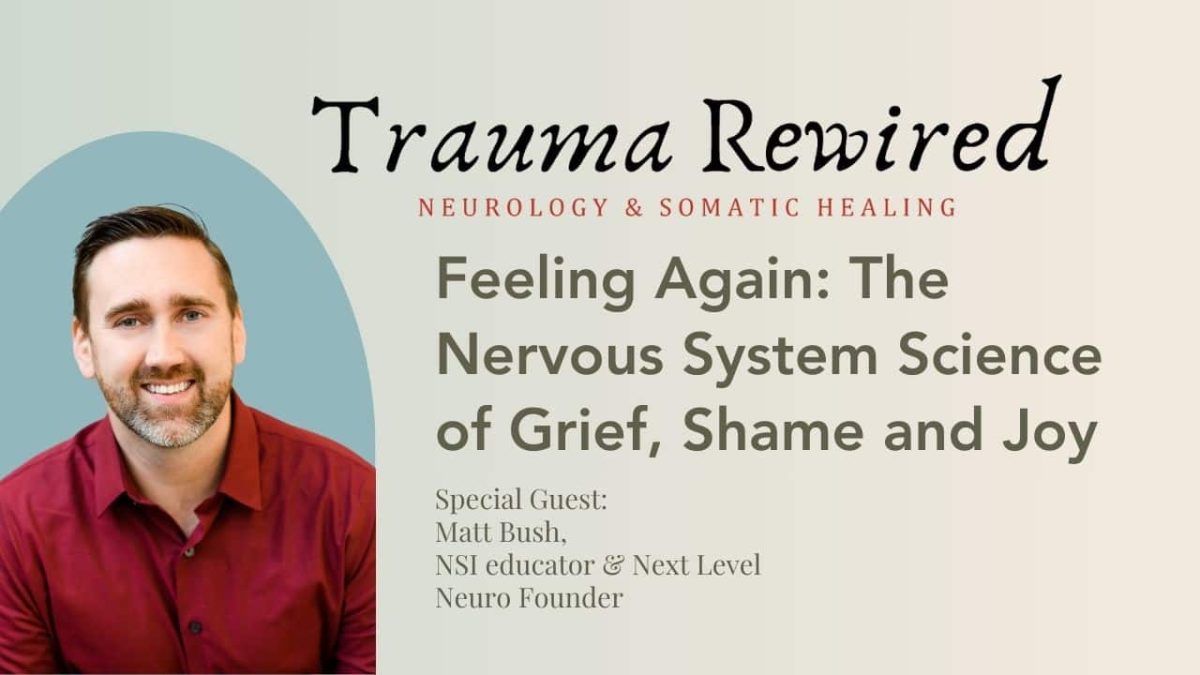
When Jennifer was asked how she felt getting her cancer diagnosis, her first word was not “scared,” it was “shame.” If you have ever felt like your emotions are too much, or you started processing feelings only to end up in pain, fatigue, or shutdown, this second part of our emotional expression series is for you.
In part two of this essential two-part series on emotional health and post-traumatic growth, we are joined again by Applied Neurology Expert and NSI Educator, Matt Bush of Next Level Neuro.
Building on Part 1’s conversation about anger, we explore how grief, shame, and positive emotions show up in the nervous system.
You will hear real client stories where simple drills or balance work brought repressed emotions to the surface, why grief can feel like “phantom limb pain” for the brain, and how shame is intertwined with freeze responses and the inner critic.
We share minimum-effective-dose practices for grief, anger, and even joy, so emotional expression becomes regulating instead of destabilizing and opens the door to genuine post-traumatic growth.
Timestamps:
- 00:00 — Diagnosis, shame and “too much” emotion
- 06:40 — When drills and bodywork unexpectedly unleash rage or tears
- 16:20 — Emotional expression that leads to pain, migraines or shutdown
- 24:45 — Grief as “phantom limb pain” and how loss impacts the body
- 35:10 — Chronic pain, bracing patterns and emotional repression
- 44:30 — Shame, freeze and the inner critic’s “always and forever” story
- 58:00 — Minimum-effective-dose grief work and nature as co-regulator
- 1:09:30 — Making joy, pleasure and intimacy safe for the nervous system
- 1:19:30 — Daily neurosomatic practice, post-traumatic growth and closing reflections
Key Takeaways:
- Emotional expression can bring on protective outputs like pain, fatigue, inflammation or shutdown when the body does not yet feel safe.
- Grief often functions like phantom limb pain: the brain must remap after a loss, which can show up in mood, immunity and body sensations.
- Shame and freeze are tightly linked; the inner critic’s absolute “I am / I’ll never” language reflects threat perception, not truth.
- Minimum-effective-dose practices for anger and grief, wrapped in front- and back-end regulation tools, help the nervous system learn that expression is safe.
- Positive emotions such as joy, pleasure and intimacy can also feel threatening and benefit from being approached in small, titrated doses that build capacity.
Resources Mentioned:
- Rewire Trial – two-week trial of guided neurosomatic classes: www.RewireTrial.com
- NSI Foundations Bundle for practitioners: www.NeurosomaticIntelligence.com/Foundations
- BrainBased.com – Elisabeth’s applied neurology and somatics community
- Related Trauma Rewired episodes:
- Emotional Repression vs Healthy Expression, Anger (Part 1 of this series)
Call to Action:
Subscribe on your favorite audio platform or join us on YouTube!