
Have you ever found yourself immediately reaching for a coping behavior like scrolling or stress eating, without even realizing what emotion triggered it? That could be a sign of emotional repression—a survival mechanism that protects you, but at a huge cost to your health and boundaries.
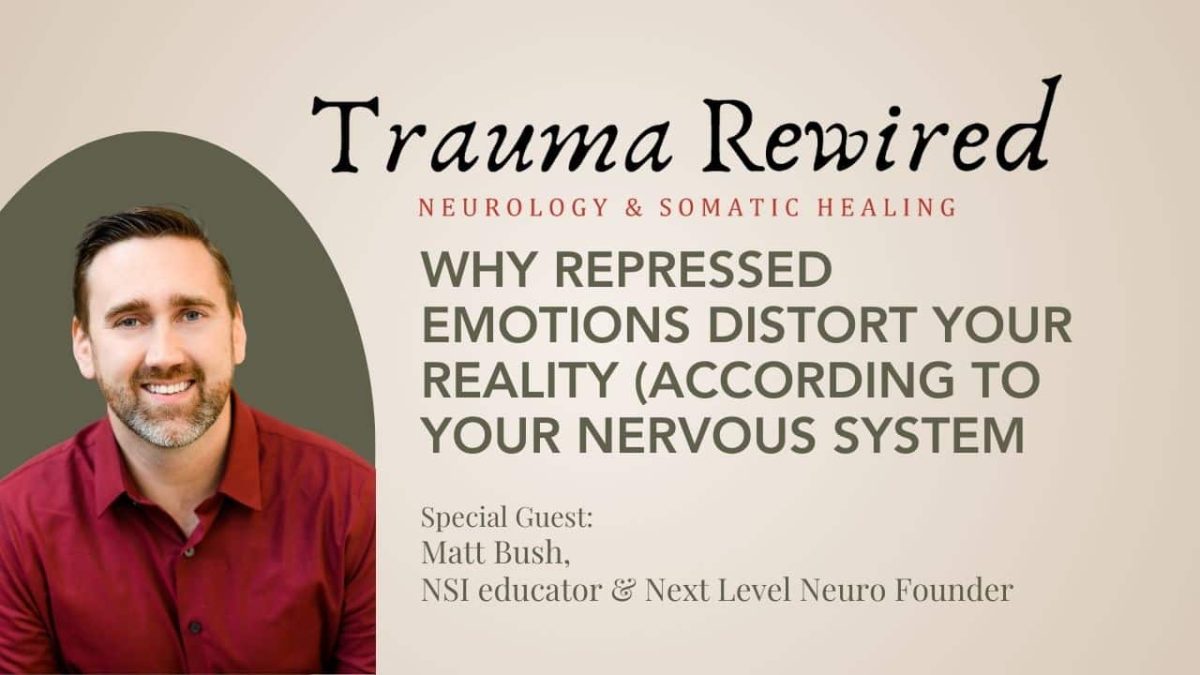
In part one of this essential two-part series on emotional health and post-traumatic growth we dive into the powerful energy of anger. We are joined by our friend and lead educator, Matt Bush, an international applied neurology expert and founder of Next Level Neuro.
This conversation explores how a lifetime of suppressed anger, tied to the fight response and complex trauma, creates a toxic internal environment, linking chronic stress to diagnoses like Stage 3 cancer.
You will learn the crucial difference between conscious suppression and unconscious repression, how this shifts your entire neurological perception of the world, and what safe, structured steps you can take to begin discharging this vital energy from your body.
This episode is for anyone who struggles with quick reactivity, feeling disconnected from what they feel, or understanding the deep mind-body connection of stored emotion.
Timestamps:
- 00:00 Introduction: anger, fight response, and health diagnosis.
- 01:37 Emotional expression & its vitality for nervous system health and reducing stress.
- 07:06 Perceived vs. real threat and the roots of repression in childhood.
- 16:45 Defining suppression versus repression as protective mechanisms.
- 23:42 The neurological and physiological consequences of repression.
- 35:34 Anger as a natural response to a boundary violation and safe release practices.
- 42:47 The link between repressed anger, boundaries, and immune system dysfunction.
- 48:28 Rewiring for a new homeostasis and the role of epigenetics.
Key Takeaways:
- Emotional repression—the unconscious blocking of emotions—is a trauma-informed survival strategy that traps the nervous system in a constant state of threat response, leading to the buildup of toxic stress hormones.
- Repression is often tied to complex post-traumatic stress, where a child’s nervous system was unable to process big emotions and lacked co-regulation from caregivers, learning that emotional expression was unsafe or threatening.
- When repressed, anger (the natural response to a boundary violation) becomes internalized, resulting in behaviors like overworking, people-pleasing, and, ultimately, immune system dysregulation (e.g., autoimmune conditions).
- Chronic repression can alter your entire perception of the world, making everyday situations feel threatening (non-cognitive), and driving unconscious avoidance or numbing behaviors (e.g., binging, workaholism, mindless scrolling).
- Healing involves creating a safe and structured environment (alone or with a trusted person/coach) to gradually access and discharge emotional energy, using neurosomatic intelligence tools to repattern the nervous system.
Resources Mentioned: - NSI Foundations Bundle (Self-Paced Program): NeurosomaticIntelligence.com/Foundations
- Boundary Rewire (4-Module Neurosomatic Journey): BoundaryRewire.com
- Book: When the Body Says No: Understanding the Stress-Disease Connection by Gabor Maté
- Subscribe on your favorite audio platform or join us on YouTube so you don’t miss Part 2 next week, where we dive deeper into shame, grief, and joy!