
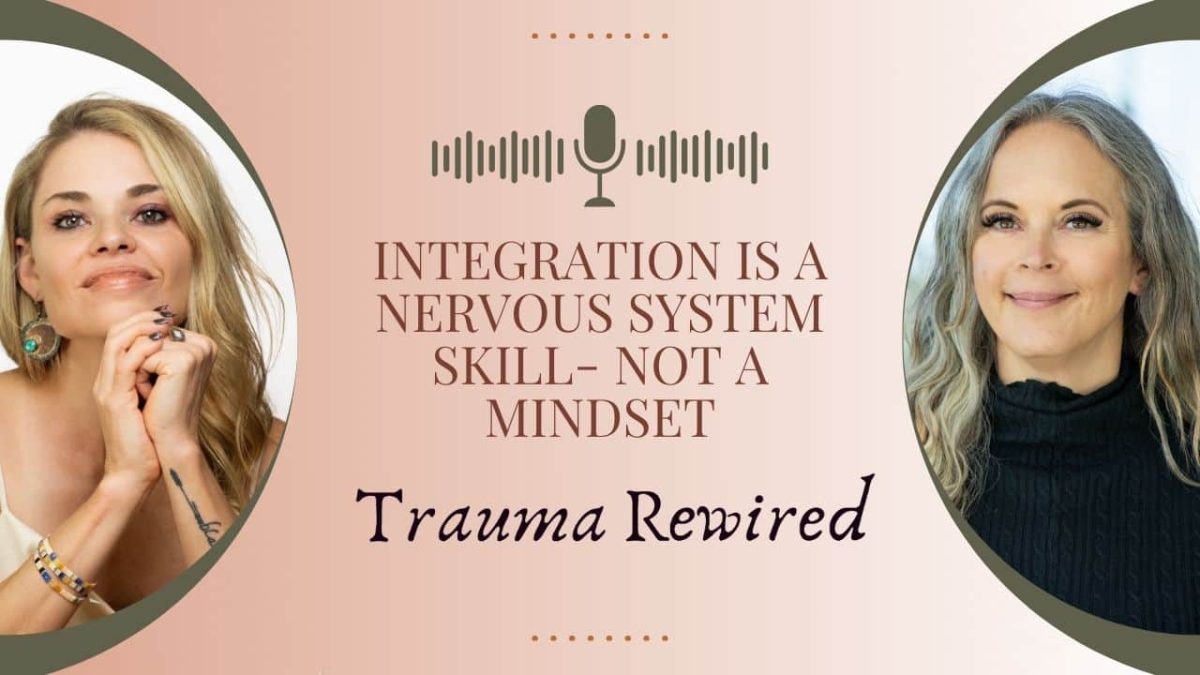
Integration is often treated as something that happens after a breakthrough — once insight, therapy, or a peak somatic or psychedelic experience is complete. But what if integration is actually the skill that determines whether healing lasts at all?
In this episode of Trauma Rewired, we explore integration as a nervous system process, not a mindset shift. Drawing from Neurosomatic Intelligence (NSI), lived experience, and years of trauma and integration work, we unpack why powerful insights so often fade — and why the body, not the mind, decides what sticks.
The conversation examines nervous system capacity, preparation, and neuroplasticity, explaining how survival patterns can override even profound experiences when the body isn’t resourced to receive them.
We discuss emotional and somatic breakthroughs, dissociation, the overlooked role of the body in psychedelic research, and why the “space after” healing experiences can feel disorienting without support.
Rather than chasing peak moments, this episode reframes healing as an embodied practice — one built through repetition, regulation, intuition, and daily nervous system support so new ways of being can truly take root.
Timestamps:
00:00 Integration as a buzzword — and why it’s misunderstood 05:30 Integration as a nervous system skill, not a mindset
12:40 Why breakthroughs fade and survival patterns take over 20:15 Capacity, preparation, and why insight can overwhelm the body
28:50 Neuroplasticity, repetition, and what you get better at
38:10 Emotional breakthroughs, dissociation, and somatic journeys 48:30 Psychedelic experiences, embodiment, and what research misses
58:45 The “space after” healing — identity shifts and disorientation 1:07:30 Worthiness, intuition, and integrating truth into daily life 1:18:00 Why healing takes time — and what it means to give time space
1:25:00 Closing reflections on integration as a way of being
Key Takeaways:
- Integration is not a cognitive process — it is how the nervous system learns to embody insight through repetition, regulation, and safety.
- Capacity determines whether an experience lands, overwhelms, or gets overridden by survival patterns.
- Preparation is essential for psychedelic and peak somatic experiences; without it, neuroplasticity can reinforce old patterns instead of creating change.
- Emotional and somatic breakthroughs require nervous system skill, especially for those with dissociation or long-standing protective responses.
- Healing often creates space before clarity — integration is choosing what fills that space next.
- Lasting change happens slowly, through daily practice, nervous system support, and honoring intuition rather than chasing intensity.
Resources Mentioned:
- RewireTrial.com: Free two-week access to live neurosomatic intelligence classes and an on-demand library of nervous system practices
- BrainBased.com: Elisabeth’s online community for applied neurology and somatic tools for behavior change, resilience, and stress processing
- Sacred Synapse: an educational YouTube channel founded by Jennifer Wallace that explores nervous system regulation, applied neuroscience, consciousness, and psychedelic preparation and integration through Neurosomatic Intelligence.
- Wayfinder Journal: Track nervous system patterns and support preparation and integration through Neurosomatic Intelligence.
Call to Action:
Subscribe on your favorite audio platform or join us on YouTube!